
 EN
EN

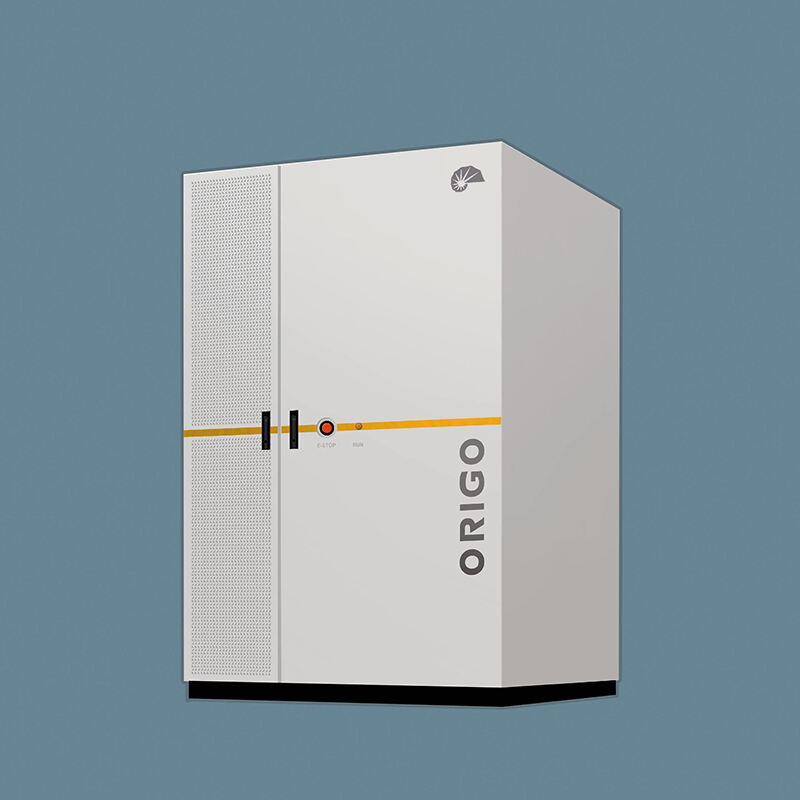
Reducing Demand Charges with Commercial and Industrial Energy Storage
Understanding demand charges in commercial and industrial facilities
Demand charges account for 30–50% of commercial electricity bills, calculated based on a facility's highest 15-minute power draw each month (Ponemon 2023). These fees disproportionately affect energy-intensive operations like manufacturing plants and data centers that experience short bursts of high consumption.
Peak shaving: How energy storage lowers monthly utility bills
BESS systems can cut down on those expensive peak demand times by around 40 to 60 percent when they automatically release stored energy during these busy periods. Instead of pulling extra power from the grid when it matters most, companies actually save money because their demand doesn't spike so dramatically. Take a look at what BLJ Solar found in their latest report for 2024. Food processors are seeing real savings, clocking in about eighteen grand each month just by keeping those sudden 500 kW jumps under control. These kinds of savings make all the difference for operations running tight budgets while still needing reliable power.
Case study: Demand charge reduction in a manufacturing plant using BESS
A Midwest auto parts manufacturer deployed a 2 MWh lithium-ion battery system to target peak demand events. The result was a 63% reduction in peak power draw, translating to $740,000 in annual savings (Ponemon 2023). With additional revenue from frequency regulation services, the system achieved payback in 4.2 years.
Smart controls for optimizing peak demand management
Advanced energy management systems use machine learning to forecast energy use and coordinate equipment operation—such as HVAC and production lines—to flatten demand curves. As demonstrated in GridBeyond’s 2024 study, these smart controls reduced demand charges by 29.7% in pharmaceutical warehouses without disrupting operations.
Time-of-Use Arbitrage: Saving on Energy Costs with Battery Storage
How TOU Rate Structures Create Cost-Saving Opportunities
Time of use (TOU) pricing means businesses pay more for electricity around those busy evening hours, usually somewhere between 4 and 9 at night. The difference in cost between these peak times and cheaper off-peak periods can be pretty significant, sometimes ranging from about 12 cents to over 35 cents per kilowatt hour. Smart companies take advantage of this by using storage systems to save power when it's cheap and then draw from those reserves when prices jump up. Some facilities manage to move anywhere from 40% to maybe even 70% of their total consumption away from peak hours. This kind of strategy typically cuts down on monthly bills by roughly 23% give or take, based on what industry reports have shown recently.
Charging During Off-Peak Hours, Discharging at Peak Times
BESS automatically charge overnight when wholesale prices fall below $0.08/kWh and discharge during afternoon and evening peaks when utility rates exceed $0.28/kWh. This daily cycle delivers 150–250 full cycles annually per battery bank, accelerating financial returns for commercial users.
Real-World Example: Retail Chain Reduces Energy Costs via BESS Arbitrage
A Midwest retail chain installed a 500 kWh battery system to manage TOU costs exceeding $0.32/kWh. The system now supplies 85% of peak-period energy needs, reducing grid reliance by 62% during high-rate hours. Monthly demand charge savings reach $12,700, while participation in demand-response programs adds $4,200 per quarter—achieving a 4.2-year ROI.
Enhancing ROI With Forecasting and Dynamic Energy Dispatch
Modern BESS leverage machine learning to predict day-ahead market prices with 92% accuracy, dynamically adjusting charge and discharge schedules to capture unexpected price spikes. This flexibility increases arbitrage revenue by 15–18% compared to fixed timing strategies. Combined with modular designs, these systems allow scalable expansion as rate structures evolve.
Increasing Solar Self-Consumption Through Commercial Energy Storage
Storing excess solar generation to reduce grid reliance
Commercial solar installations often produce surplus energy midday when on-site demand is low. Integrating energy storage captures this excess, enabling facilities to reduce grid dependence by 30–50%. Businesses combining solar with storage increase self-consumption by 40%, shifting midday generation to evening operational loads.
Maximizing self-consumption rates with battery energy storage systems (BESS)
Intelligent BESS prioritize solar self-consumption over exporting to the grid, using real-time data and pricing signals to optimize dispatch. Energy management platforms adjust charging and discharging based on facility load patterns, boosting solar utilization by up to 65% compared to solar-only systems—verified across multiple utility pilot programs.
Case study: Warehouse achieves 65% solar offset with integrated storage
An 800 kWh battery system paired with a 1.2 MW rooftop solar array at a Midwest distribution center enables nighttime use of daytime solar production. Key outcomes include:
| Metric | Pre-Installation | Post-Installation | Improvement |
|---|---|---|---|
| Grid energy purchase | 82% | 35% | 57% reduction |
| Solar self-consumption | 41% | 76% | 35% increase |
| Annual energy costs | $178,000 | $102,000 | 42% savings |
The project reached full payback in 6.8 years through utility incentives and ongoing energy savings.
Generating Revenue Through Demand-Response and Grid Services
How Commercial and Industrial Energy Storage Supports Grid Stability
Energy storage systems for commercial and industrial applications make power grids more reliable by offering quick response capabilities like frequency regulation and voltage support. These systems can react almost instantly, taking in extra electricity when there's too much or putting power back into the grid during shortfalls. A recent Department of Energy study from 2023 shows that about 8 out of 10 utility companies prefer using storage solutions rather than traditional methods to avoid expensive power outages which cost around $740k every single hour. Plus, this approach helps bring more renewable energy sources into the mix, something many in the industry see as crucial for future sustainability efforts.
Earning Incentives Through Automated Demand-Response Programs
Automated demand-response (ADR) platforms enable businesses to earn $100–$200/kW annually by temporarily reducing load during grid stress. OpenADR-enabled systems, like those used by a Midwest automotive plant with a 2 MWh battery, can generate $58,000 quarterly through regional markets such as PJM’s Emergency Load Response Program.
Trend Analysis: Growth of Utility-Sponsored Programs in North America
The growth in utility supported storage incentives has been nothing short of explosive, jumping around 217 percent since 2020 across nearly three dozen US states and Canadian provinces. Take a look at programs such as California's Self Generation Incentive Program (SGIP) or New York's NYSERDA initiative which are now allocating roughly 30% of their budgets specifically towards commercial storage solutions that integrate with the grid. Then there's FERC Order 2222 that's really pushing things forward by mandating fair pay for all types of distributed energy resources. Looking ahead, experts predict we'll see over 47 gigawatts worth of storage enabled demand response capacity by 2028. This forecast makes sense when considering how dynamic pricing models and those fancy cloud-based energy management systems continue to gain traction in the marketplace.
FAQ
What are demand charges?
Demand charges are fees on commercial electricity bills based on the highest power draw from the grid during any 15-minute interval each month.
How can energy storage help reduce demand charges?
Energy storage systems release stored energy during peak times, reducing the demand from the grid and subsequently lowering demand charges by up to 60%.
What is Time-of-Use (TOU) pricing?
TOU pricing involves higher charges for electricity during peak hours, usually between 4 and 9 PM, allowing businesses to save costs by shifting usage to off-peak times.
How do commercial facilities benefit from solar self-consumption with storage?
Facilities can store excess solar energy generated during low demand periods and use it later, increasing self-consumption and reducing reliance on the grid.