


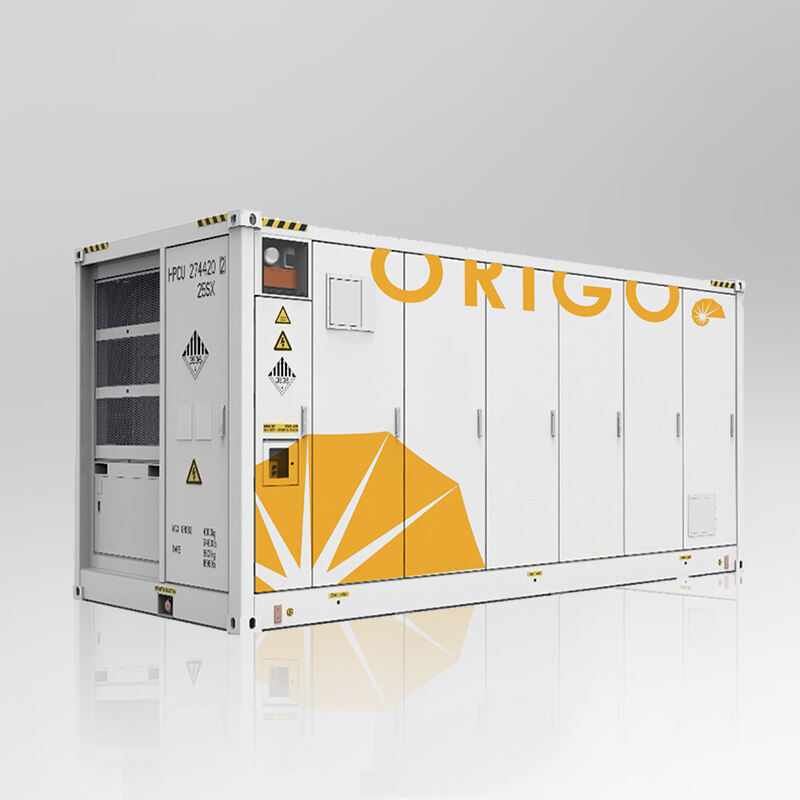
Superior Safety and Thermal Stability of LFP Battery Systems
Thermal stability and resistance to thermal runaway in LFP batteries
The safety profile of LFP energy storage systems stands out because of their iron phosphate cathode design that doesn't break down even when things get really hot. Other lithium ion battery types just can't compare here. These LFP batteries keep their structure intact all the way up to around 270 degrees Celsius, which is about 35 percent hotter than what NMC batteries handle before they start to fail. And importantly, they don't release oxygen molecules during this process, something that stops dangerous thermal runaway situations from happening according to research published by Mayfield Energy last year. Tests following UL 9540A standards have confirmed this stability too. When researchers pierced these batteries with nails as part of standard safety evaluations, only about 1% experienced any kind of chain reaction failures across multiple cells.
Comparative safety analysis: LFP vs. NMC in industrial environments
Operators working with lithium iron phosphate (LFP) systems report around two thirds fewer instances where they need to intervene with thermal management issues compared to nickel manganese cobalt (NMC) systems according to Energy Storage News from last year. What makes LFP stand out is its much higher resistance to thermal runaway events, which means companies don't have to spend extra money on those expensive containment structures mandated by NFPA 855 standards for NMC setups. Looking at actual field data from 47 different industrial locations in 2023 shows something pretty impressive too LFP cut down those annoying false positive heat warnings by nearly four fifths. Fewer false alarms translate into better day to day operations since technicians aren't constantly chasing phantom problems, and overall maintenance requirements drop significantly as well.
Case Study: Preventing overheating incidents in warehouse energy systems using LFP
A Midwest logistics hub eliminated cooling system failures after replacing legacy NMC batteries with LFP storage. The facility recorded:
| Metric | NMC System | LFP System | Improvement |
|---|---|---|---|
| Thermal alerts/month | 4.2 | 0.3 | 93% |
| Cooling energy use | 18.7 kWh | 2.1 kWh | 89% |
| Maintenance incidents | 11/yr | 1/yr | 91% |
The switch significantly improved system resilience while reducing energy and labor costs tied to thermal management.
Balancing safety and performance: Why C&I sectors prioritize reliability over energy density
Businesses in commercial and industrial sectors often go for lithium iron phosphate batteries even though they have around 12 to 15 percent less energy density than nickel manganese cobalt options. The reason? Safety first. Facilities that switch to LFP see real money savings too. Insurance costs drop by about half according to recent data, and getting permits approved happens roughly three quarters quicker under UL standards from last year. Another big plus for LFP is how it maintains steady voltage throughout operation. Unlike other battery types where power levels can dip unexpectedly, LFP keeps things consistent so there's no risk of damaging delicate machinery down the line. This stability makes all the difference when running critical operations day after day.
Exceptional Longevity and Durability in Continuous Industrial Operations
Longevity and Cycle Life of LFP Batteries Under Daily Cycling Conditions
Lithium Iron Phosphate (LFP) batteries excel in cycle life, maintaining 80% capacity after more than 6,000 charge-discharge cycles at 80% depth of discharge (DoD). Their resistance to crystalline stress enables consistent performance over 15–20 years of continuous operation—ideal for industrial applications requiring uninterrupted uptime.
Data Point: Over 6,000 Cycles at 80% Depth of Discharge in Real-World C&I Installations
Third-party testing in 2023 confirmed 6,342 full cycles at 80% DoD in warehouse energy systems, equivalent to 17 years of daily cycling before reaching end-of-life. Under identical conditions, NMC batteries exhibited 30% faster capacity fade, highlighting LFP’s durability advantage in real-world settings.
Principle: Stable Cathode Structure Contributing to Extended Service Life
The olivine crystal structure of LFP cathodes undergoes minimal volumetric expansion (<3% versus 6–10% in layered oxide cathodes), reducing mechanical degradation during ion intercalation. This stability contributes to superior performance metrics:
| Factor | LFP Performance | Industry Average |
|---|---|---|
| Capacity Retention | 99.95% per cycle | 99.89% per cycle |
| Ionic Conductivity | 10³ S/cm | 10¹º S/cm |
These characteristics support longer service life and reduced degradation over time.
Trend: Shift Toward Lifetime-Centric Procurement in Industrial Energy Projects
Over 64% of facility managers now prioritize 15-year total cost of ownership (TCO) over initial purchase price (2024 Industrial Energy Survey). LFP’s ¬0.5% annual capacity loss and maintenance-free design align with this shift, cutting replacement costs by 40–60% compared to systems needing mid-life battery swaps.
Lower Total Cost of Ownership and Long-Term Cost-Effectiveness
LFP energy storage systems deliver significant financial advantages for commercial and industrial operators through durable design and efficient operation, reshaping lifecycle cost models for large-scale energy infrastructure.
Levelized Cost of Storage (LCOS) and Total Cost of Ownership (TCO) Benefits of LFP Batteries
LFP chemistry reduces both capital and operational expenses. With no need for complex thermal management, LFP systems achieve 18–22% lower LCOS than NMC alternatives over 15-year horizons. Key drivers include:
- Three times longer cycle life under deep cycling
- 40% lower annual degradation rates
- Minimal capacity fade below 80% state-of-health thresholds
| Cost Factor | LFP Systems | NMC Systems |
|---|---|---|
| Cycle Life | 6,000+ | 2,000–3,000 |
| Annual Degradation | <1.5% | 3–5% |
| Cooling Needs | Passive | Active |
This combination makes LFP the preferred choice for cost-conscious, long-duration deployments.
Cost-Effectiveness of LFP Over Time Compared to Alternative Chemistries
Although NMC batteries may have a lower upfront cost per kWh, LFP’s gradual degradation yields 34% greater cumulative energy throughput over a decade. According to 2023 battery aging studies, this results in $12–$18/MWh savings in industrial applications.
Strategy: Reducing Maintenance and Replacement Costs in Commercial Facilities
Operators can maximize TCO savings by leveraging LFP’s low-maintenance design. Real-world data shows:
- 60% fewer cell replacements than NMC systems
- 45% reduction in cooling system maintenance hours
- 80% lower risk of forced outages
Strategic planning around these advantages allows facilities to extend service intervals and reduce downtime.
Data Point: 20–30% Lower TCO Over 10 Years in Solar-Integrated Warehouses
An analysis of 42 solar-powered distribution centers found that LFP storage arrays reduced annual energy costs by $140,000–$210,000 per site. The ability to endure 8,000+ partial cycles enabled reliable 24/7 load shifting without the performance cliffs seen in alternative chemistries.
Seamless Integration with Renewables and Energy Optimization Applications
Renewable Energy Integration with LFP Storage for Resilient Power Supply
LFP battery systems work really well when it comes to handling the ups and downs of renewable energy sources. These systems come equipped with sophisticated power electronics that let them connect directly to both solar panels and wind turbines without needing extra conversion steps. Modern installations of LFP batteries can hit around 95% efficiency when storing and then releasing electricity, which means all that extra sunshine harvested at noon doesn't just go to waste but gets saved for when people need it most in the evenings. According to a recent study from the Grid-Interactive Storage folks in 2024, places that switched to LFP technology saw their reliance on the main electrical grid drop between 40 to 60 percent simply because they could plan ahead based on what the weather was going to do next day.
Storing Renewable Energy with LFP Batteries in Commercial Solar Farms
Solar farms using LFP chemistry achieve 18–22% higher annual energy yield than lead-acid systems, based on data from 120 commercial sites. The stable discharge profile of LFP prevents voltage sag during cloud transients, ensuring uninterrupted operation of critical loads such as refrigeration and conveyor systems in co-located food processing facilities.
Peak Shaving and Time-of-Use Optimization Using LFP Storage
Industrial users optimize ROI through:
- 30–50% reduction in peak demand charges via AI-driven load forecasting
- 80% utilization of time-of-use rate differentials in markets with 3-tier pricing
- Sub-2-second response to grid frequency fluctuations
These capabilities make LFP a cornerstone of dynamic energy management strategies.
Case Study: PV Self-Consumption Optimization in a Distribution Center
A Midwest logistics hub integrated a 2.4MWh LFP system with its 3MW rooftop solar array, achieving:
| Metric | Pre-Installation | Post-Installation |
|---|---|---|
| Grid Import | 62% | 28% |
| Solar Self-Use | 55% | 89% |
| Energy Costs | $0.14/kWh | $0.09/kWh |
This setup cut annual energy expenses by $214,000 and provided 72 hours of backup power during a regional outage (Energy Metrics Quarterly 2023).
Reliable Backup Power and Operational Continuity in Critical Facilities
Backup Power During Outages with LFP Systems in Critical Operations
LFP energy storage provides instantaneous backup during grid failures, with 89% of new data centers projected to adopt lithium-based solutions by 2026. These systems outperform diesel generators by enabling seamless transitions and supporting renewable integration, delivering 8–12 hours of clean, silent runtime for hospitals, telecom hubs, and other mission-critical operations.
Principle: Fast Response Times and Consistent Voltage Output
LFP batteries transfer full load in under 20 milliseconds—three times faster than traditional UPS systems—preventing disruptions to sensitive processes like MRI imaging or semiconductor fabrication. Their voltage output remains within ±1% variation throughout discharge, delivering clean, stable power essential for precision equipment, unlike aging lead-acid alternatives.
Case Study: Data Center Continuity During Grid Failure Using LFP Storage
When the big winter storm hit in 2023 and knocked out power across large parts of the Midwest, one data center stayed online thanks to its 2.4MWh lithium iron phosphate system. Meanwhile, other facilities were losing money fast at a rate of around $740k every single hour they remained offline. The lithium battery setup actually ran for 14 straight hours during those blackouts, which speaks volumes about how reliable these systems can be when severe weather strikes. And we're seeing these kinds of extreme weather events happen nearly 60% more often compared to back in 2000 according to National Centers for Environmental Information data from last year. Looking at real world results like this makes it pretty clear why so many companies are turning to LFP technology to protect their vital operations against unpredictable power disruptions.
FAQs About LFP Battery Systems
What is the main advantage of LFP batteries over other lithium-ion batteries?
The main advantage of LFP batteries is their superior safety and thermal stability, which makes them more resistant to thermal runaway compared to other lithium-ion batteries like NMC.
Why are industrial sectors favoring LFP batteries despite their lower energy density?
Industrial sectors favor LFP batteries for their reliability, longevity, and lower total cost of ownership. Though they have slightly lower energy density, they offer more consistent voltage and fewer maintenance issues.
How do LFP batteries integrate with renewable energy systems?
LFP batteries integrate seamlessly with renewable energy systems, providing robust and efficient energy storage by optimizing peak shaving and time-of-use, therefore enhancing overall energy management strategies.
Table of Contents
-
Superior Safety and Thermal Stability of LFP Battery Systems
- Thermal stability and resistance to thermal runaway in LFP batteries
- Comparative safety analysis: LFP vs. NMC in industrial environments
- Case Study: Preventing overheating incidents in warehouse energy systems using LFP
- Balancing safety and performance: Why C&I sectors prioritize reliability over energy density
-
Exceptional Longevity and Durability in Continuous Industrial Operations
- Longevity and Cycle Life of LFP Batteries Under Daily Cycling Conditions
- Data Point: Over 6,000 Cycles at 80% Depth of Discharge in Real-World C&I Installations
- Principle: Stable Cathode Structure Contributing to Extended Service Life
- Trend: Shift Toward Lifetime-Centric Procurement in Industrial Energy Projects
-
Lower Total Cost of Ownership and Long-Term Cost-Effectiveness
- Levelized Cost of Storage (LCOS) and Total Cost of Ownership (TCO) Benefits of LFP Batteries
- Cost-Effectiveness of LFP Over Time Compared to Alternative Chemistries
- Strategy: Reducing Maintenance and Replacement Costs in Commercial Facilities
- Data Point: 20–30% Lower TCO Over 10 Years in Solar-Integrated Warehouses
- Seamless Integration with Renewables and Energy Optimization Applications
- Reliable Backup Power and Operational Continuity in Critical Facilities
- FAQs About LFP Battery Systems