
 EN
EN

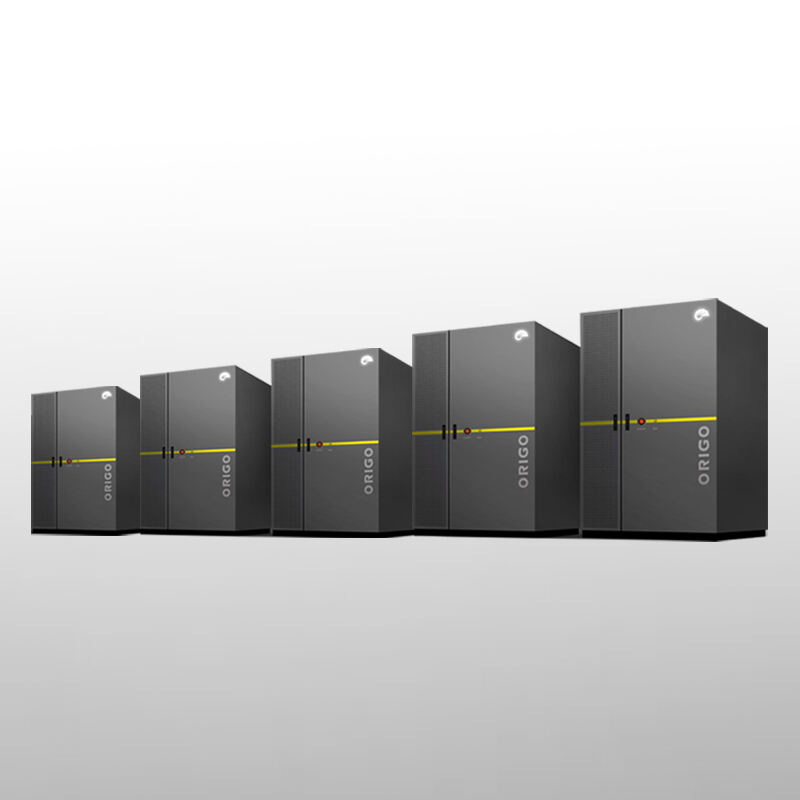
For factories focused on streamlining their energy storage systems, minimizing costs, and fostering sustainable growth, selecting the appropriate battery technology is essential. Within the industrial and commercial sectors, the most relevant choices are Lithium Iron Phosphate (LFP) and Nickel Manganese Cobalt (NMC) batteries, though their individual characteristics mean that the needs of the specific factory will determine the most appropriate selection. With 16 years specific experience in the industrial and commercial energy storage, The Origotek Co., Ltd. has assisted over 100 factories in deploying energy solutions, and this article details the most important factors regarding the decision of implementing LFP versus NMC battery systems in factories.
1. Core Performance Comparison: LFP vs. NMC Batteries for Factories
The energy efficiency and the operational stability of factories over time is fundamentally determined by the operational success of LFP and NMC batteries. Identification of the differences in the critical parameters is the first step towards an informed decision.
Safety: LFP batteries have a considerable advantage when it comes to safety. LFP batteries contain no cobalt, are capable of withstanding high temperatures (up to 200 ° C), and do not suffer from thermal runaway. This makes LFP batteries ideal for high-load, long-hour operations, such as manufacturing plants with continuous production lines, where the safety consequences of battery failure are serious. In comparison, NMC batteries are less thermally stable and exhibit a greater risk of overheating and thermal runaway, necessitating tighter temperature control measures.
Cycle Life: In terms of cycle life, LFP batteries are also the most durable. LFP batteries typically have a cycle life of 3,000 to 5,000 times at which point 80% of the chambers are used (remaining capacity ≥80% ). For factories using energy storage systems for long term (5–10 years) peak shaving or backup power, LFP batteries serve to reduce the frequency of battery replacement and, therefore, lower the total lifecycle costs. In comparison, NMC batteries have shorter cycle lives of 2,000 to 3,000 times, which makes them more suitable for factories with short-term energy storage demands or more frequent system upgrades.
Energy Density & Cost: NMC batteries utilize space more efficiently with an energy density range of 180–250 Wh/kg, which translates to less occupied space from the same energy storage capacity. This is crucial for factories with space constraints (urban workshops, for instance). Nevertheless, NMC batteries' more expensive prices can be attributed to the elevated prices of cobalt and nickel, NMC’s primary components. While LFP batteries have an even lower energy density (120–180 Wh/kg), NMC batteries are still 20–30% more expensive, therefore more economical LFP batteries are an ideal choice for factories for large-scale energy storage (MW-level storage industrial parks).
Low-Temperature Performance: NMC batteries function better in cold conditions. Their discharge efficiency remains at 70–80% at -20°C, while the LFP drop to 50–60%. For factories in cold or high-latitude regions (northern Europe or northern China, for instance), NMC batteries may prove to be more dependable, especially in outdoor energy storage systems. LFP batteries can still be improved for lower temperatures, but the improved performance comes with a cost since LFP batteries have to be equipped with heating systems. LFP batteries have to be equipped with heating systems. This improved performance, however, comes at the cost of a heating system.
2. Align Battery Choice with Factory Energy Application Scenarios
Each factory has different purposes for energy stored, and assigning different battery types for different purposes can help. Origotek Co., Ltd. has updated its products to fourth generation standards and now supports peak shaving, virtual power plants (VPP), backup power and three phase unbalance management, providing a reference for factory selection.
Peak Shaving & Valley Filling: This scenario involves batteries that can handle quick cycles of charging and discharging. The long cycle life of LFP batteries along with its highly efficient charge and discharge rate (≥90%) makes it the best option. For instance, a manufacturing factory that l use peak shaving to reduce high electricity costs which can occur in on-peak hours, can rely on LFP batteries which will provide stable operation for 8-10 years without the need of major replacements.
Backup Power: Here, safety and reliability are most important. The ability of LFP batteries to provide continuous power and withstand over charging, discharging and short circuits makes it able to supply during unexpected power outages which is critical for certain factories i.e. electronics manufacturing lines with sensitive equipment. For backup power, NMC batteries can also be used but they require additional safety components which increase the complexity of the whole system.
Participating in a Virtual Power Plant (VPP) requires factories to have batteries that can respond rapidly to grid dispatching. The NMC batteries’ high power density means they can be charged and discharged quickly, which makes them appropriate for factories that need to rapidly change their energy output, including those that participate in real-time grid frequency regulation. Moreover, LFP batteries’ consistent performance makes them more appropriate for factories that focus on long-duration energy supply in VPPs. Origotek’s customized solutions can design LFP and LFP battery management systems (BMS) for enhanced responsiveness in VPPs.
In three-phase unbalance management, these batteries need to deliver consistent output in order to balance grid load. To this end, LFP batteries assist in stabilizing power supply and reducing equipment damage from unbalanced currents, as a result of their low self-discharge rate (≤1% per month) and consistent voltage output. Origotek’s fourth-generation products have released more sophisticated predictive LFP battery BMS management algorithms, which provide optimized three-phase unbalance management.
3. Why Partner with Origotek for Factory Battery Solutions?
Selecting a battery type is just part of the entire picture. Working with a knowledgeable professional ensures the solution works with the factory’s specific requirements. In the 16 years of experience in the industrial and commercial energy storage provided by Origotek Co., Ltd., which is jointly funded by Tianjin Lishen Battery Co., Ltd. and Shandong Shangcun Energy Co., Ltd., there are 3 principal advantages:
Custom Fit Systems: Origotek considers and evaluates a factory’s energy load, the amount of available space and physical layout of the factory, local climate, and the specific application scenario (like peak shaving vs VPP) in order to recommend either LFP or NMC batteries and LFP batteries and overall energy systems (BMS and cooling systems included) designed around these various parameters.
Enhanced Product Trustworthiness: After 16 years of iteration, Origotek’s fourth generation batteries address customer concerns and offer enhanced trustworthiness. For LFP batteries, it has optimized cycle life to 5,000 times; for NMC batteries, it has improved thermal stability with advanced electrolyte formulas.
Long-Term Support for Energy Freedom: Origotek assists in pursuing mankind’sdream of energy independence. It offers services for the entire lifecycle of factory batteries (installation and debugging, maintenance and replacement). This guarantees the energy storage system functions efficiently for years. Origotek’s team offers technical support to assist factories in the strategic selection of LFP or NMC batteries to optimize energy use and savings.
In closing, the question for factories is not about “which is better” but “which fits better” when deciding between LFP and NMC batteries. Every factory has to assess their unique performance (safety, cycle life, cost) and situation, and work alongside battery experts like Origotek to strategically integrate battery selection into their business for improved economic and social sustainability.