
 EN
EN

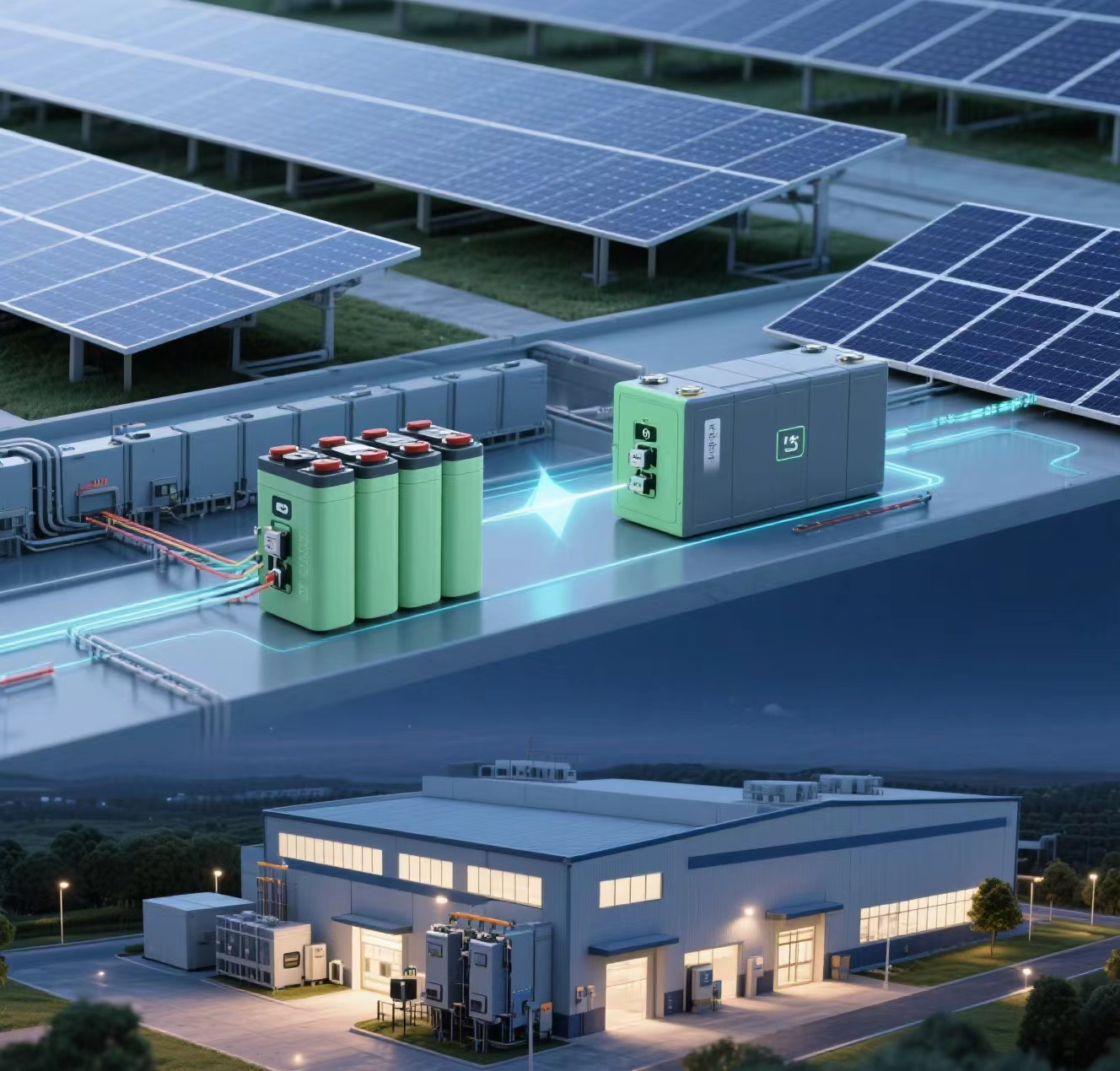
Solving Renewable Intermittency with Grid Energy Storage
Why Solar and Wind Variability Challenges Grid Balance
Solar irradiance and wind speeds fluctuate constantly due to weather patterns and diurnal cycles—causing unpredictable generation gaps. For example, cloud cover can reduce solar output by up to 70% within minutes (NREL, 2023). Without flexible response mechanisms, such rapid drops force grid operators to activate fossil-fuel peaker plants, undermining decarbonization goals. The core challenge lies in aligning inherently variable renewable supply with inflexible electricity demand curves—creating instability risks during sudden generation declines.
Time-Shifting Energy: How Grid Energy Storage Smooths Supply-Demand Mismatches
Grid energy storage systems resolve intermittency by decoupling generation from consumption. They charge during renewable surplus periods—such as midday solar peaks—and discharge during shortages, like evening demand spikes. This “energy time-shifting” bridges supply-demand gaps seamlessly: a 2023 Stanford study found grid-scale batteries reduce renewable curtailment by 92% while extending clean energy availability into high-demand hours. By converting intermittent generation into dispatchable power, storage transforms renewables into controllable assets—maintaining grid frequency without relying on fossil backups.
Enhancing Grid Stability Through Battery Energy Storage Systems
Frequency Regulation and Synthetic Inertia from BESS
Battery energy storage systems (BESS) deliver critical grid stability services through ultrafast frequency regulation and synthetic inertia. Unlike conventional thermal generators—which rely on physical rotating mass and respond in seconds—BESS reacts to frequency deviations in milliseconds, up to 100× faster than thermal plants. This enables precise absorption of excess energy during frequency spikes or immediate injection during dips, keeping grids tightly within the 60Hz (or 50Hz) operating band. Synthetic inertia further enhances resilience by algorithmically adjusting charge/discharge rates to mimic rotational inertia—counteracting the destabilizing effect of inverter-based renewables. In California, BESS deployments have delivered 100MW of stabilization within 0.5 seconds of detecting voltage fluctuations during extreme heatwaves—preventing blackouts and reducing dependence on inefficient peaker plants. Given that uncontrolled frequency disturbances cost utilities up to $10,000 per MW-minute, BESS serves as both a technical necessity and an economic imperative for high-renewable grids.
Scaling Long-Duration Grid Energy Storage for Deep Decarbonization
Beyond 4 Hours: Why Multi-Hour and Seasonal Storage Is Critical
Lithium-ion batteries excel at sub-4-hour applications like frequency regulation—but they cannot address multi-day or seasonal energy gaps caused by prolonged low-wind or cloudy periods. As grids target 90%+ clean energy penetration, long-duration storage becomes essential to shift surplus solar and wind generation across days, weeks, or even seasons. Without it, renewable curtailment rises sharply during peak production, and fossil-fueled peakers remain indispensable during extended low-generation windows. Research shows grids with >70% renewable share require storage durations exceeding 10 hours to maintain reliability through seasonal wind lulls or winter solar deficits.
Hybrid Architectures: Pairing Lithium-Ion and Green Hydrogen for Optimal Flexibility
No single storage technology meets all grid needs. Lithium-ion delivers rapid response and high round-trip efficiency for daily cycling and short-term stability, while green hydrogen offers scalable, near-limitless duration for seasonal balancing. Hybrid architectures combine these strengths strategically: lithium-ion manages sub-4-hour grid events and daily load shifting, while green hydrogen stores excess summer solar for winter heating and industrial demand. This synergy leverages lithium-ion’s falling costs—$97/kWh in 2023—and hydrogen’s potential for terawatt-hour-scale storage, enabling a fully decarbonized, resilient grid infrastructure.
Real-World Impact: Case Evidence of Grid Energy Storage Success
Real-world deployments confirm grid energy storage as a proven enabler of renewable integration and system resilience. South Australia’s Hornsdale Power Reserve—the world’s first utility-scale lithium-ion project—delivered rapid frequency regulation, cut grid stabilization costs by over 90%, and reduced wholesale electricity prices. In California, battery installations repeatedly sustained critical power during heatwaves and wildfire-related outages—maximizing solar utilization while preventing blackouts. Saudi Arabia’s 12.5GWh grid-scale project supports its national target of 50% renewable energy by 2030. Germany relies on pumped-hydro storage to balance high wind variability, and Southern California’s Metropolitan Water District achieved a 30% annual reduction in energy costs through intelligent storage dispatch. Collectively, these cases demonstrate that grid energy storage is not theoretical—it’s operational, scalable, and central to reliable decarbonization.
FAQs
What is grid energy storage?
Grid energy storage refers to technologies that store electricity during periods of surplus energy generation and release it during times of shortage to stabilize the power grid and ensure a consistent energy supply.
How does renewable energy intermittency challenge grid stability?
Renewable energy sources like solar and wind are subject to variability due to weather patterns and time of day, leading to mismatches between energy production and consumption that make it difficult to maintain a stable grid.
What are the benefits of battery energy storage systems (BESS)?
BESS provide ultrafast response for frequency regulation, synthetic inertia for grid stability, and enable time-shifting of renewable energy, reducing reliance on fossil-fuel peaker plants and mitigating grid disturbances.
Why is long-duration energy storage important?
Long-duration energy storage is crucial for handling multi-day or seasonal fluctuations in renewable energy generation, enabling grids to achieve high levels of clean energy penetration without relying on fossil fuels during extended low-generation periods.
What are hybrid storage architectures?
Hybrid storage architectures combine technologies like lithium-ion batteries for short-term stability and green hydrogen for long-duration and seasonal energy storage, addressing diverse grid needs more effectively.