
 EN
EN

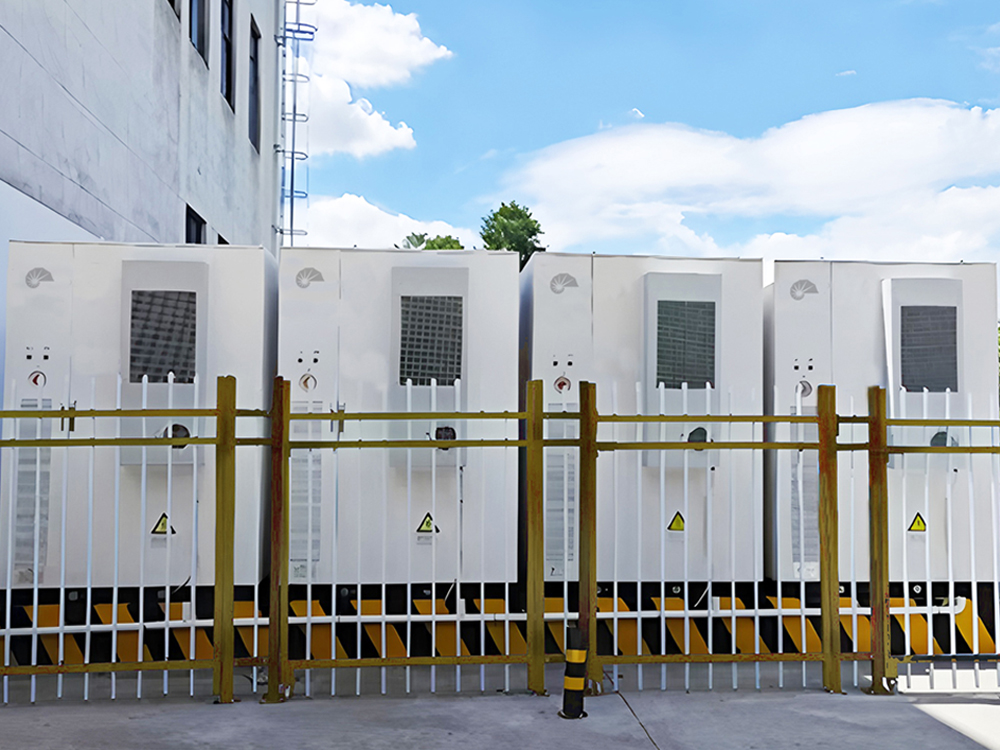
Superior Cycle Life and Calendar Longevity of LFP Energy Storage
15–20 Year Service Life and 6,000–10,000 Cycles Under Real-World Conditions
Lithium Iron Phosphate (LFP) energy storage systems deliver exceptional durability, achieving 15–20 years of operational service with 6,000–10,000 full charge cycles at 80% depth of discharge (DoD). This lifespan outperforms nickel-manganese-cobalt (NMC) and nickel-cobalt-aluminum (NCA) alternatives by 2–3×—directly reducing replacement frequency and total cost of ownership. The chemistry’s resilience stems from its stable voltage profile during cycling, which minimizes electrode stress and structural fatigue. Grid-scale deployments confirm less than 20% capacity degradation after a decade of daily cycling, validating LFP’s suitability for high-utilization applications like renewable energy buffering and peak shaving.
Olivine Crystal Structure: Molecular Basis for Minimal Capacity Fade
LFP’s olivine crystal framework provides inherent stability through strong covalent iron-phosphate bonds that resist degradation during lithium-ion insertion and extraction. Unlike layered oxide cathodes, this rigid 3D structure prevents oxygen release and transition-metal dissolution—key failure mechanisms in NMC and NCA chemistries. As a result, LFP exhibits annual capacity fade rates below 1.5%, compared to 2–3% for nickel-based systems. This structural integrity enables consistent performance across temperature extremes (–20°C to 60°C) and maintains >80% usable capacity beyond 4,000 cycles, as demonstrated in accelerated aging studies published in the Journal of Power Sources (2023).
Inherent Thermal and Chemical Stability Enhances LFP Energy Storage Safety Over Time
Thermal Runaway Resistance: >270°C Onset Temperature vs. <200°C in NMC/NCA
LFP fundamentally resists thermal runaway due to its stable olivine structure and robust phosphate-oxygen bonds—which do not release oxygen under thermal stress. Its onset temperature exceeds 270°C, over 35% higher than NMC and NCA chemistries, which typically fail below 200°C. When thermal events occur, LFP cells generate only one-sixth the exothermic heat of NMC, drastically lowering propagation risk. This margin allows simpler, lower-cost thermal management while meeting stringent commercial fire safety standards—including UL 9540A and IEC 62619.
Reduced Degradation Across Temperature Variability and Cycling History
LFP maintains predictable aging behavior despite ambient fluctuations and repeated cycling. Its degradation rate remains below 2% per 1,000 cycles even at 60°C ambient—outperforming NMC equivalents (3–4% under identical conditions). The cathode’s minimal lattice strain during ion transport inhibits microcrack formation, a primary degradation pathway in layered oxides. Combined with deep discharge tolerance and wide operating range (–20°C to 60°C), LFP delivers linear, low-slope aging curves over 15+ years—reducing lifetime maintenance costs by 18–22% versus conventional lithium-ion and lead-acid alternatives.
Operational Resilience: How Usage Patterns and BMS Optimize LFP Energy Storage Reliability
Deep Discharge Tolerance (80–100% DoD) Without Accelerated Aging
LFP uniquely supports deep discharge (80–100% DoD) without the accelerated capacity loss seen in NMC or lead-acid batteries. Its flat voltage curve and low mechanical stress during lithium extraction prevent irreversible structural damage. While NMC and lead-acid suffer significant degradation below 50% DoD, LFP retains >95% capacity after 2,000 cycles at 100% DoD. Field use cases—including off-grid telecom sites and remote microgrids—routinely cycle LFP to near-zero states daily with no measurable performance penalty or increased failure risk.
BMS-Driven SoH Monitoring and Adaptive SoC Control for Long-Term Consistency
Advanced Battery Management Systems (BMS) extend LFP reliability by continuously tracking State-of-Health (SoH) and dynamically adjusting State-of-Charge (SoC) limits. Core functions include real-time cell balancing, temperature-compensated charge control, and algorithmic DoD capping based on cumulative cycle history and capacity trend analysis. For example, the BMS may restrict usable SoC to 80% DoD above 40°C or permit full-depth cycling only when long-term fade is verified as negligible. This adaptive strategy preserves voltage consistency, mitigates calendar aging, and ensures operational readiness across decades—particularly critical for emergency backup and mission-critical infrastructure.
Field-Validated Reliability: LFP Energy Storage Outperforms NMC, NCA, and Lead-Acid
Real-world deployments consistently validate LFP’s leadership in longevity and safety. Independent 2023 field testing showed LFP batteries retaining 92% capacity after 2,500 cycles—20% higher than comparable NMC units. This advantage reflects LFP’s stable chemistry, deep discharge resilience, and superior thermal margin: ignition resistance above 270°C versus NMC’s ~200°C threshold. Against lead-acid—limited to just 300–500 cycles at 50% DoD—LFP delivers 3–5× longer service life and eliminates routine replacement schedules. These results, corroborated across utility-scale, commercial, and off-grid installations, confirm LFP as the most reliable, cost-effective foundation for resilient, long-duration energy storage.
FAQ
What sets LFP energy storage apart from other lithium-ion chemistries?
LFP batteries outperform other lithium-ion chemistries in terms of lifespan, safety, and thermal stability. They offer a longer service life (15–20 years), higher cycle durability (6,000–10,000 cycles), and better thermal runaway resistance (onset temperature above 270°C).
How does the olivine crystal structure impact LFP battery performance?
The olivine crystal structure ensures strong covalent iron-phosphate bonds, minimizing capacity fade by preventing oxygen release and metal dissolution. This enhances the battery’s stability and enables consistent performance across a wide range of temperatures.
What operational advantages do LFP batteries provide?
LFP batteries excel in deep discharge tolerance (80–100% DoD), maintain low degradation rates, and can perform reliably under extreme temperatures ranging from –20°C to 60°C. Combined with advanced BMS, they achieve long-lasting and efficient operations.
Are LFP batteries more cost-effective than NMC or lead-acid batteries?
Yes, LFP batteries significantly reduce lifetime maintenance and replacement costs. Their durability (3–5× longer lifespan than lead-acid) and better safety profiles make them a cost-effective choice for energy storage.
What industries benefit most from LFP energy storage?
Due to their durability, safety, and reliability, LFP batteries are ideal for high-utilization scenarios like renewable energy buffering, peak shaving, off-grid telecom sites, remote microgrids, and backup systems for mission-critical infrastructure.
Table of Contents
- Superior Cycle Life and Calendar Longevity of LFP Energy Storage
- Inherent Thermal and Chemical Stability Enhances LFP Energy Storage Safety Over Time
- Operational Resilience: How Usage Patterns and BMS Optimize LFP Energy Storage Reliability
- Field-Validated Reliability: LFP Energy Storage Outperforms NMC, NCA, and Lead-Acid
-
FAQ
- What sets LFP energy storage apart from other lithium-ion chemistries?
- How does the olivine crystal structure impact LFP battery performance?
- What operational advantages do LFP batteries provide?
- Are LFP batteries more cost-effective than NMC or lead-acid batteries?
- What industries benefit most from LFP energy storage?